Wolf range repair: the burners and the oven, diagnosed separately
A Wolf range is really two appliances bolted into one steel frame. The cooktop half lives on gas, spark and flame; the oven half lives on heat, sensors and electronics. When something goes wrong, the first useful question is which half is misbehaving, because the parts, the tests and the likely visit length are different for each. We repair all-gas and dual fuel Wolf ranges in every width the brand builds, and the $89 service call is credited toward the repair.
Rated 4.9 out of 5 from 187 customer reviews · read them
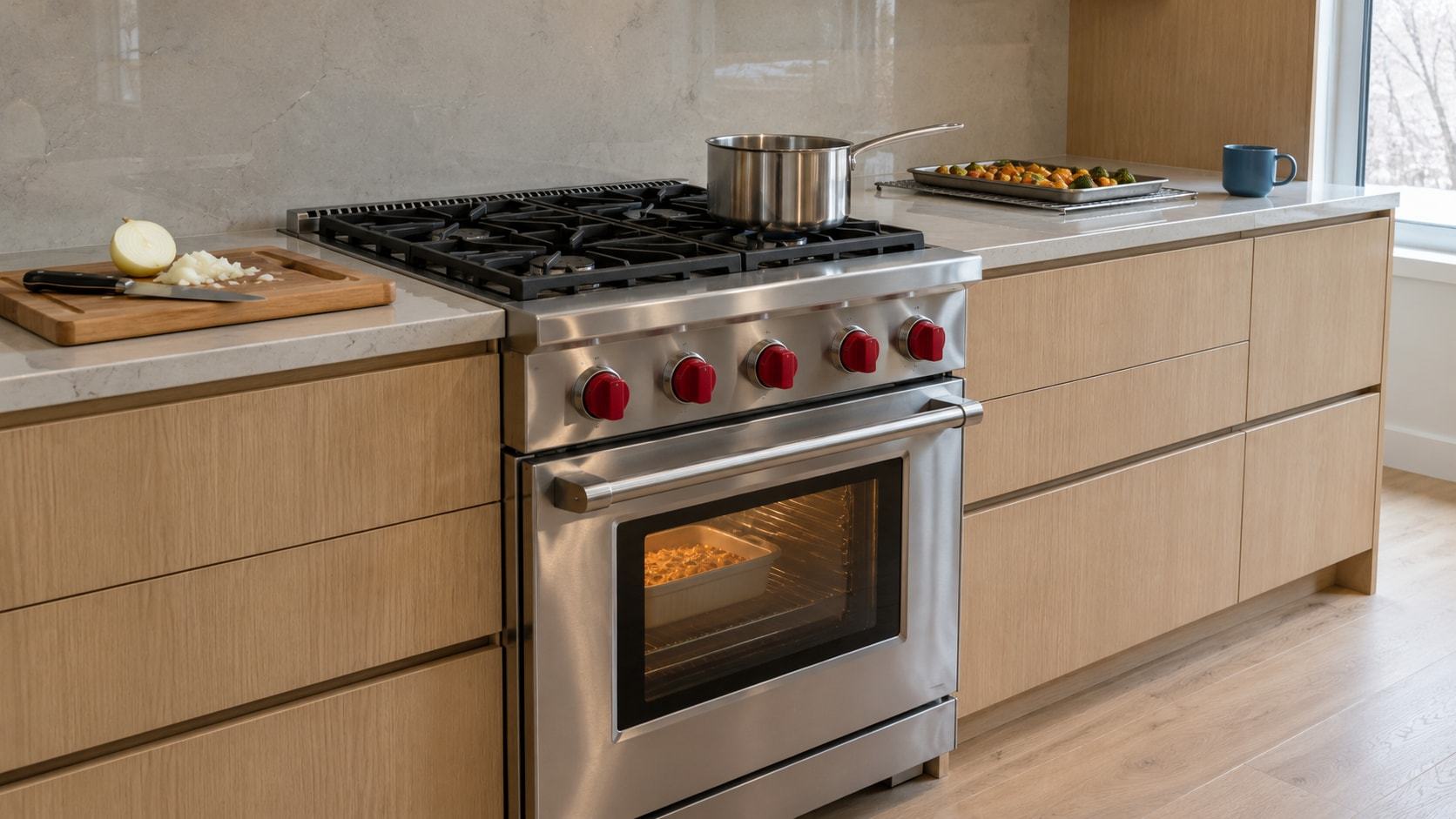
Why does my Wolf range burner click but not light?
The spark is working, but gas and spark are not meeting at the burner. The usual culprits are a burner cap sitting off-center, ports blocked by spills, a cracked or worn igniter, or a burner valve that is not passing enough gas. Reseat the cap once; if it still only clicks, it needs a technician.
What the range is telling you, half by half
The first four signs come from the cooking surface, the rest from the oven or the controls.
-
A burner clicks but never catches
Usually behind it: Igniter, blocked burner ports or a misplaced cap; less often the burner valve.
The way forward: Let the grate cool, lift the cap, set it back flat and try once more. Stop there if it still fails.
-
Flames look yellow, lazy or uneven around the ring
Usually behind it: Incomplete combustion from clogged ports or a poor air-to-gas mix at the burner.
The way forward: Not an emergency, but book a visit: a dirty flame wastes gas and leaves soot on pans.
-
Gas smell while a burner refuses to light
Usually behind it: Gas is flowing with no flame to burn it, through a failed igniter or a valve problem.
The way forward: Treat it as a safety event. Follow the gas rule below before anything else.
-
Knobs feel stiff, loose or turn without effect
Usually behind it: A worn valve stem, a cracked knob insert or a switch behind the knob.
The way forward: Do not force a stiff gas knob; a forced valve can start to leak.
-
The oven never reaches the set temperature, or takes far too long
Usually behind it: On a dual fuel range: a heating element, the temperature sensor or the control board. On an all-gas range: the oven burner's ignition or its thermostat.
The way forward: Note how far it gets on an oven thermometer; that number speeds up diagnosis.
-
Food bakes hot on one side or the dial no longer matches reality
Usually behind it: Thermostat or sensor drift, or uneven heat from a weak burner or element.
The way forward: Often fixed by recalibration or a sensor swap rather than major work.
-
Self-clean will not start, will not finish, or the door stays latched
Usually behind it: The motorized door lock, its switch or the control that runs the cycle.
The way forward: Let the oven cool completely. Never pry a latched door.
-
An error code appears on the display
Usually behind it: The electronic control has detected a fault in a sensor, the lock or a heating circuit.
The way forward: Write the code down, power the range off and on once, and call if it returns.
-
Clicking, humming or rattling during normal cooking
Usually behind it: Spark still firing after ignition, a cooling or convection fan, or loose panels.
The way forward: Describe when the noise starts and stops; it narrows the search a lot.
Two halves, two ways of failing
The cooking surface on a Wolf range is mechanical at heart. Each sealed burner has its own valve, its own igniter and a cap that has to sit precisely so the flame forms a clean ring. Most surface faults are about that chain breaking somewhere: food in the ports, a cracked ceramic igniter, a valve that has worn after years of daily turns. These jobs are usually quick to pin down because you can see and hear the fault.
The oven half is a closed box, and its faults hide behind panels. On a dual fuel range the oven is electric, so a technician tests elements, the temperature sensor, wiring and the control board with a meter. On an all-gas range the oven runs on its own burner and ignition system, so the work looks more like the cooktop side, only out of sight. Either way, the controls decide when heat is applied, which is why an oven fault can look like a heating problem and turn out to be electronic.
That split is also why a fault on one half rarely stops the other: a dual fuel range with a dead oven still cooks on its burners while a part is on order. If both halves act up at once, say so when you call, since it may point to something they share, such as power or the control electronics.
For problems that belong only to a separate cooktop or rangetop, see Wolf cooktop repair. Built-in E Series and M Series wall ovens have their own page: Wolf wall oven repair.
Why is the flame on my Wolf range yellow?
A yellow flame means the gas is not burning completely. On a Wolf range that is usually clogged burner ports or a disturbed air-to-gas mix at the burner. It is not an immediate danger by itself, but it should be cleaned and adjusted so the burner runs blue, clean and efficient.
How a range visit runs
Every repair follows the same three stages: find the cause, fix it, then prove the whole range works. Most range repairs are finished in a single visit.
-
Diagnosis on both halves
The technician starts with your description, then lights every burner and runs the oven, not just the one that failed. Igniters, valves, the thermostat or sensor and the electronic controls are tested in turn until the cause is confirmed rather than guessed.
-
A clear price before work starts
You hear what is wrong and what the repair will cost before anything is replaced. The $89 service call is credited toward that repair, and the exact figure is set only after the inspection.
-
The repair itself
Common wear parts such as igniters, thermostats, gaskets and sensors travel with the technician, so many jobs are finished on the spot. If a control board or a model-specific part has to be ordered, a second visit is booked for the install.
-
Proof that everything works
After the repair, every burner is lit at high and low, the oven is brought up to temperature, and gas connections that were opened are checked for leaks. The work area is cleaned before the technician leaves.
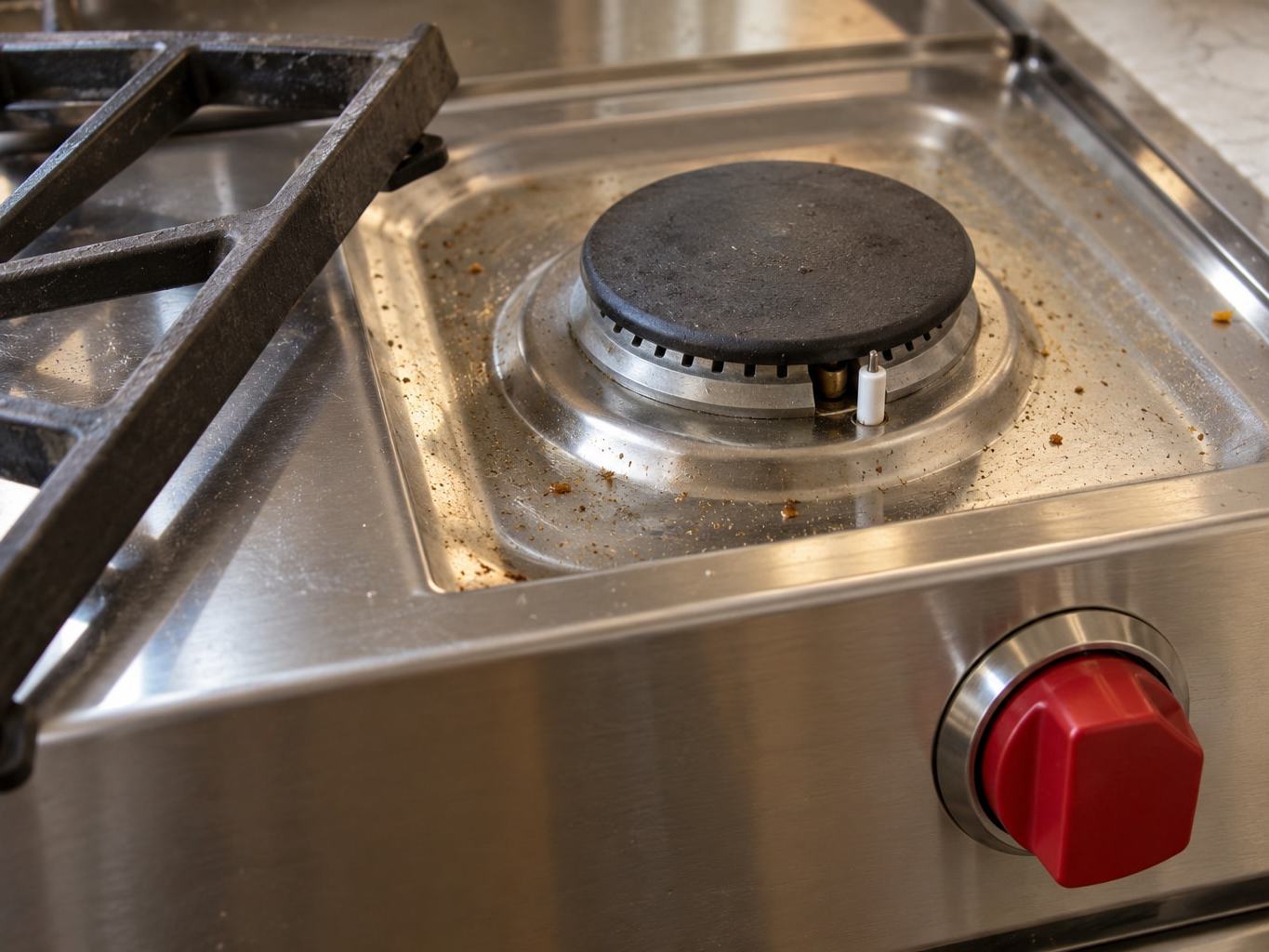
Which kind of Wolf range do you have
Wolf builds its freestanding ranges in 30, 36, 48 and 60-inch widths. Width changes how many burners and parts are involved; the fuel setup changes how the oven is tested. The model and serial label tells us both.
| Configuration | Cooking surface | Oven half | What we test first |
|---|---|---|---|
| All-gas range | Sealed gas burners with spark ignition | Gas oven burner with its own ignition | Igniters, valves, oven ignition and thermostat |
| Dual fuel range | Sealed gas burners with spark ignition | Electric convection oven | Igniters on top; elements, sensor and control board below |
| Induction range | Induction zones under glass | Electric oven | Power electronics, sensor and control board |
| 30 or 36-inch frame | Fewer burners, single oven cavity | One oven to test | The faulty burner or oven circuit |
| 48 or 60-inch frame | More burners and cooking options | Larger layout with more parts to reach | Each section in turn, so nothing is missed |
What shapes the final repair bill
We do not quote range repairs over the phone, because two ranges with the same complaint can need very different work. These are the things that decide the number.
-
The diagnosis
The service call covers the technician's visit and testing time, and it is credited toward the repair if you go ahead.
-
Which part has failed
A burner igniter, a burner valve, an oven element, a sensor and a control board are very different parts, and the board is usually the largest item.
-
Whether the part is on the truck
Common wear parts usually are. Model-specific parts are ordered, which adds a return visit to install them.
-
How much of the range has to come apart
Reaching a burner igniter is quick; reaching an oven sensor or a valve inside a 60-inch frame takes longer.
-
How many faults are found
If the burners and the oven both need work, each repair is explained and priced separately so you can decide.
$89 service call, credited toward the repair. The exact price is set after the technician inspects the appliance.
Why is my Wolf dual fuel range oven not heating while the burners work?
On a dual fuel range the oven is electric and the burners are gas, so working burners only prove the gas side is fine. A cold oven points to a tripped breaker on the oven circuit, a failed heating element, the temperature sensor or the control board. Check the breaker first, then book a diagnosis.
All-gas or dual fuel: where the repairs differ
Owners often ask whether one setup is more trouble than the other. It is less about reliability and more about which parts are in play.
All-gas Wolf range
- Burners and oven both depend on gas flow and ignition.
- Oven faults usually trace to the oven burner's ignition or its thermostat.
- Needs only standard power for ignition and controls.
- Repairs on both halves involve gas, so every opened joint is leak-tested.
Dual fuel Wolf range
- Gas burners on top, electric convection oven below.
- Oven faults usually trace to an element, the sensor or the control board.
- Needs a dedicated high-voltage circuit for the oven.
- A cold oven with working burners is common, and it does not mean a gas fault.
Tell us which one you have when you call, or read the model and serial label on the range; your owner's guide shows where it sits. It decides which parts we bring.
Questions about Wolf range repair
Who repairs Wolf ranges near Naperville?
We do. Naperville Wolf Kitchen Pros works only on Wolf cooking equipment and covers Naperville, Aurora, Wheaton, Lisle, Bolingbrook, Plainfield and Downers Grove; the full list is on our service area page. Calls are answered around the clock and visits run daily.
How long does a Wolf range repair take?
Most range repairs are finished in one visit of about an hour or two. The main exception is a control board or another model-specific part that has to be ordered; then the diagnosis happens on the first visit and the install on the second.
Can a technician replace a Wolf range igniter on the first visit?
Usually, yes. Igniter replacement is one of the most common range repairs, and igniters are among the parts technicians carry. The other burners are tested at the same time, since igniters tend to wear at a similar pace.
Is it worth repairing an older Wolf range?
In most cases, yes. Wolf ranges are built around a heavy frame and serviceable parts, so igniters, valves, sensors and boards can be replaced individually. We will tell you honestly if a part is no longer available for your model before you spend anything beyond the service call.
What does a Wolf range repair cost?
A range is a cooktop and an oven in one body, so the price turns on which half has the fault and which part sits behind it: an igniter or spark module on top, a temperature sensor or heating part in the oven, or a control board that has to be ordered. The technician tests both halves before naming a figure, and nothing is done until you agree to it. The $89 service call counts toward that figure; the pricing page has the rest.
My range is still under the Wolf warranty. Should I call you?
Check your purchase paperwork first. While the manufacturer's coverage is still running, contact Wolf first; only Wolf's warranty terms decide what affects that coverage, so that question is theirs to answer. Once the range is out of warranty, or if Wolf points you elsewhere, we are glad to help.
Tell us which half of the range is acting up and what you see or hear. Call (872) 276-8585 any time, or book a visit online; for keeping burners and the oven in good shape between visits, see our range care notes, and for every way to reach us, the contact page.
Calls answered 24/7 · visits daily, 8:00 AM – 6:00 PM