Wolf outdoor grill repair, done on your patio
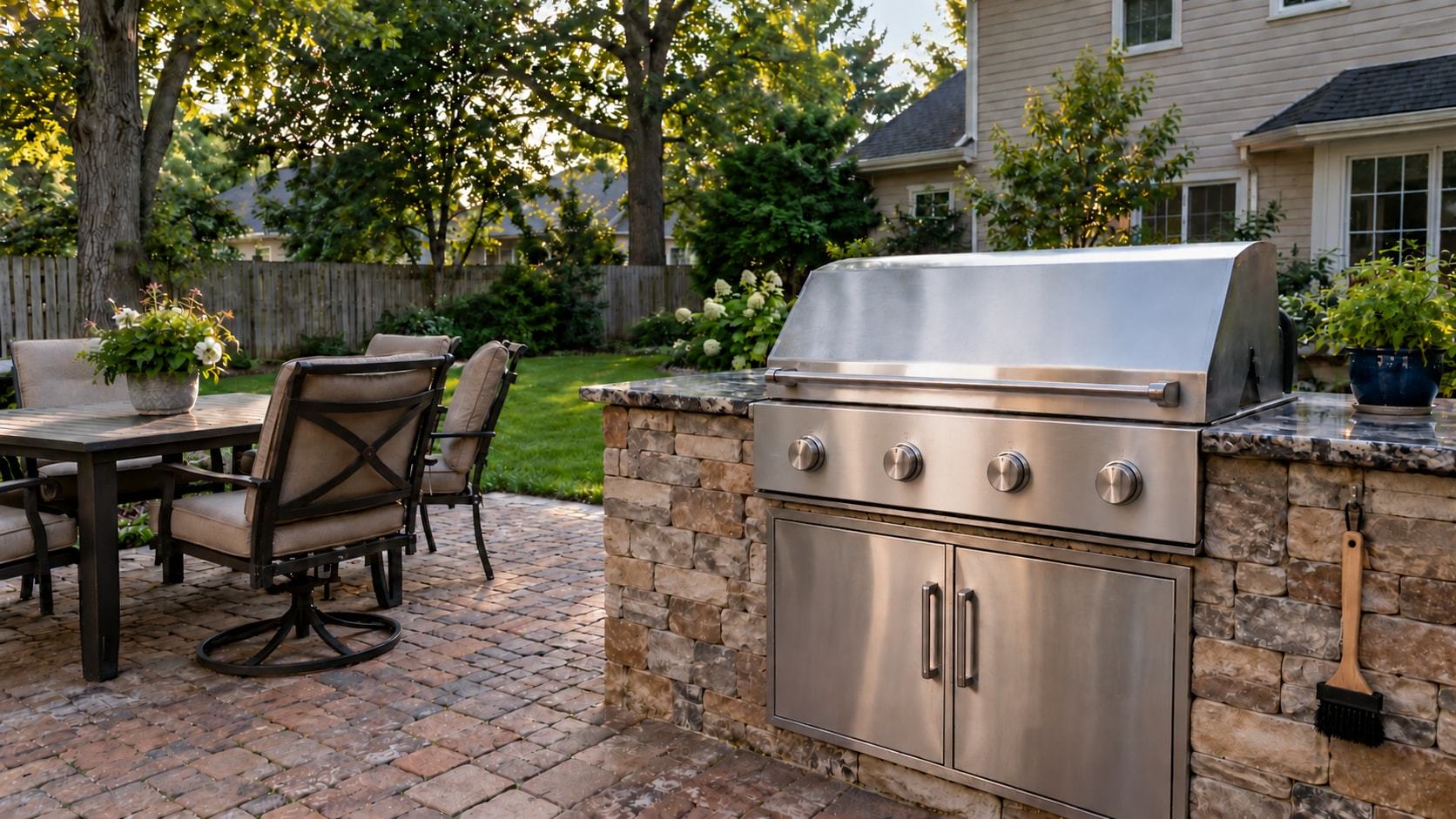
A Wolf outdoor grill spends its life in Illinois weather: humid summers, freeze-thaw winters, pollen, leaves and the occasional nest in a burner tube. Most faults we find trace back to that exposure rather than to heavy use, and since a built-in grill head does not travel, every repair happens right where it stands in your outdoor kitchen.
Rated 4.9 out of 5 from 187 customer reviews · read them
Why won't my Wolf outdoor grill ignite?
If the igniter clicks but no flame appears, gas is not reaching the burner in the right amount: a blocked burner port or tube, a sticking valve, or a supply or regulator problem. If there is no click at all, look at the igniter, its wiring or its power source. Spiders and debris in the tubes are a classic spring cause.
A grill year in the western suburbs
Outdoor grills fail on a seasonal rhythm. Knowing where you are in it tells you what to look for and when a visit makes the most sense.
- Early spring
The best time to have a grill serviced. Burner tubes and ports are checked for insects, nests and rust that built up over winter, before the first busy weekend rather than during it.
- Late spring to midsummer
Heavy use shows weak spots: an igniter that hesitates, a burner that lags behind its neighbors, grease building under the heat plates.
- Late summer
Grease and heat take their toll on grates and heat deflectors. Uneven cooking zones and flare-ups become more common.
- Autumn
A good moment to clean out the grease tray, check the lid hinges and fit a cover before leaves and moisture settle in. Our seasonal checklist covers the rest of the kitchen too.
- Winter
Freeze and thaw cycles work on moisture inside tubes and connections. A grill used through the winter needs its igniters and burners watched more closely.
Grill symptoms and where they usually lead
-
Igniter clicks, no flame
Usually behind it: Gas is not arriving: a blocked burner port or tube, a valve that does not open fully, or low supply pressure from the regulator or line.
The way forward: Stop clicking after a few tries and let any gas clear. Repeated attempts can let gas collect under the hood.
-
No click at all
Usually behind it: Igniter electrode, its wire, the module, or the outlet and power supply that feed it.
The way forward: Check that the outdoor outlet feeding the grill has power; a tripped GFCI outlet after rain is a common culprit.
-
Tall flame on one burner, weak or yellow on another
Usually behind it: Partly blocked or corroded burner tube, debris at the air shutter, or a valve wearing on that burner.
The way forward: Note which burner. A lazy yellow flame often means the tube needs attention.
-
Will not get hot enough or cannot hold a steady temperature
Usually behind it: Regulator issues, a valve problem, weak burners, or warped heat plates letting heat escape.
The way forward: Compare all burners on high with the lid closed. Low heat on every burner points to supply or regulator.
-
Gas smell around the grill
Usually behind it: A loose fitting, a damaged hose or line, or a leaking valve or regulator.
The way forward: Follow the safety note above: touch nothing, leave the area and call from outside.
-
Rust holes or flaking on the burner tubes
Usually behind it: Moisture and grease over many seasons. Corroded tubes distort the flame and can let it escape where it should not.
The way forward: Do not keep cooking on a tube with visible holes.
-
Warped grates or heat plates, or flare-ups that will not settle
Usually behind it: Heat and grease have deformed the parts, or the grease path below is clogged.
The way forward: Clean the grease tray; bent plates and grates need replacing.
-
Lid stiff, crooked or will not stay open
Usually behind it: Worn or bent hinges, or corrosion at the pivot points.
The way forward: Do not force it. A lid that drops unexpectedly is a burn hazard.
Why is my Wolf grill burner flame uneven?
An uneven flame almost always means one burner is not getting clean gas and air: a tube partly blocked by debris or rust, a dirty air shutter, or a valve wearing out. If every burner is weak, the regulator or gas supply is more likely. A healthy burner shows a steady, mostly blue flame along its full length.
Your part of the job and ours
A lot of grill trouble is prevented by cleaning, and that is squarely the owner's job. Anything that carries or controls gas is ours.
What an owner can safely do
- Brush the grates and wipe the exterior after cooking.
- Empty and clean the grease tray so drippings do not burn below.
- Lift the grates and heat plates to look at the burner tubes for rust or debris.
- Keep the grill covered when not in use, once it has cooled.
- Reset a tripped outdoor GFCI outlet if the igniters or lights go dead.
What needs a technician
- Removing, clearing or replacing burner tubes.
- Testing or replacing gas valves and the regulator.
- Checking connections and lines for leaks with proper equipment.
- Diagnosing igniter modules and wiring.
- Replacing warped heat plates, hinges and other structural parts.
Clean it yourself; leave anything that touches gas flow to someone who tests for leaks before and after the work.
What we repair on Wolf outdoor cooking equipment
Wolf outdoor grills come in 36-inch, 42-inch and 54-inch widths, and many outdoor kitchens pair them with a side burner module or a warming drawer. Each piece has its own weak points.
| Equipment | What we check | Common outdoor wear |
|---|---|---|
| Grill head, 36, 42 or 54 inch | Burner tubes, valves, igniters, regulator connection, grates, heat plates, lid and hinges | Rust in tubes, debris in ports, warped plates |
| Side burner module | Burner, valve, igniter, cap and grate | Clogged ports from spills, igniter failure after rain |
| Warming drawer | Heating element, controls, drawer slides | Moisture in the drawer, stiff slides |
| Gas supply at the grill | Connector, regulator and fittings | Loose fittings, weathered hose or line |
What a grill repair bill depends on
Grill repairs vary more than most, because two seasons of weather can turn a simple clean-out into a parts job. These are the things that decide the final price.
-
How many burners are affected
One sluggish burner and a whole row of corroded tubes are different jobs.
-
The part involved
Igniters, burner tubes, valves, the regulator and heat plates each carry their own parts cost and time.
-
Corrosion and access
Rusted fasteners and tight outdoor kitchen cabinetry can slow the work down.
-
Parts availability
Common parts may be on hand; parts for a specific model or size may have to be ordered for a second visit.
$89 service call, credited toward the repair. The exact price is set after the technician inspects the appliance.
When should I service my outdoor grill?
Spring is the best time: before the first cookout, after a winter in which insects, nests and moisture may have settled in the tubes. A grill that sees heavy use all summer also benefits from a mid-season look at the igniters and burners. Owner cleaning should continue all year.
Why we repair grills where they stand
Wolf grill heads are built into outdoor kitchens with gas lines, counters and cabinetry around them, so moving one for repair would cost more than fixing it. Our technicians bring tools and common parts to your patio, and the full job, from diagnosis to the final light-off, happens there.
Every visit follows the three stages we use on every Wolf appliance. First the cause is found: every burner is lit and watched, and the gas connections are checked. Then the repair is agreed and carried out. Finally each burner, the side burner and any warming drawer are run, so you see a steady flame across the grill before the technician leaves.
If you are getting ready for the season, our grill season prep guide covers the cleaning steps. If something goes wrong mid-cookout, the urgent repair page explains what to do first, and the pricing page shows how the $89 visit is credited.
Grill questions from homeowners
Do you repair Wolf outdoor grills at my home?
Yes, always on site. A built-in grill stays in place, and the technician works in your outdoor kitchen from diagnosis through the final test.
My Wolf grill igniter clicks but the burner will not light. What is wrong?
The spark is there, but gas is not reaching the burner properly. Debris in the burner ports or tube, a sticking valve, or a supply or regulator issue are the usual causes.
Can winter weather damage a Wolf outdoor grill?
It can. Moisture, freeze and thaw, and nesting insects are the main threats. Covering the grill once it has cooled and having it checked in spring helps.
Is it worth repairing an older Wolf outdoor grill?
Often yes, because the parts that wear out, such as tubes, valves, igniters and plates, can be replaced individually. We give you the exact price after inspecting the burners, valves and body, so you can decide with real numbers.
How do I book a grill repair?
Call (872) 276-8585, answered 24/7, or book a visit online. Visits run daily from 8 AM to 6 PM, and the $89 call is credited toward the repair. Questions can also go through our contact page.
Tell us the grill size and what it is doing. Call (872) 276-8585 or book a visit online; the $89 visit is credited toward the repair, and the exact price is set after the technician inspects the grill.
Calls answered 24/7 · visits daily, 8:00 AM – 6:00 PM