Wolf built-in coffee system repair
A built-in coffee machine reports its health in every cup. Taste, speed, temperature and the sounds it makes along the way each point to a different part inside: the grinder, the pump, the heater, the valves or the brew unit. We repair Wolf 24-inch and 30-inch coffee systems in your kitchen, without pulling them out for a trip to a shop.
Rated 4.9 out of 5 from 187 customer reviews · read them
Why is my Wolf coffee system not brewing?
When the machine grinds but nothing pours, or stops partway, water is not getting through: a pump that has weakened, a valve that sticks, scale narrowing the water path, or a brew unit that is not seated or is jammed. Check the water tank and reseat the brew unit first. If it still refuses, the pump, valves or heater need testing.
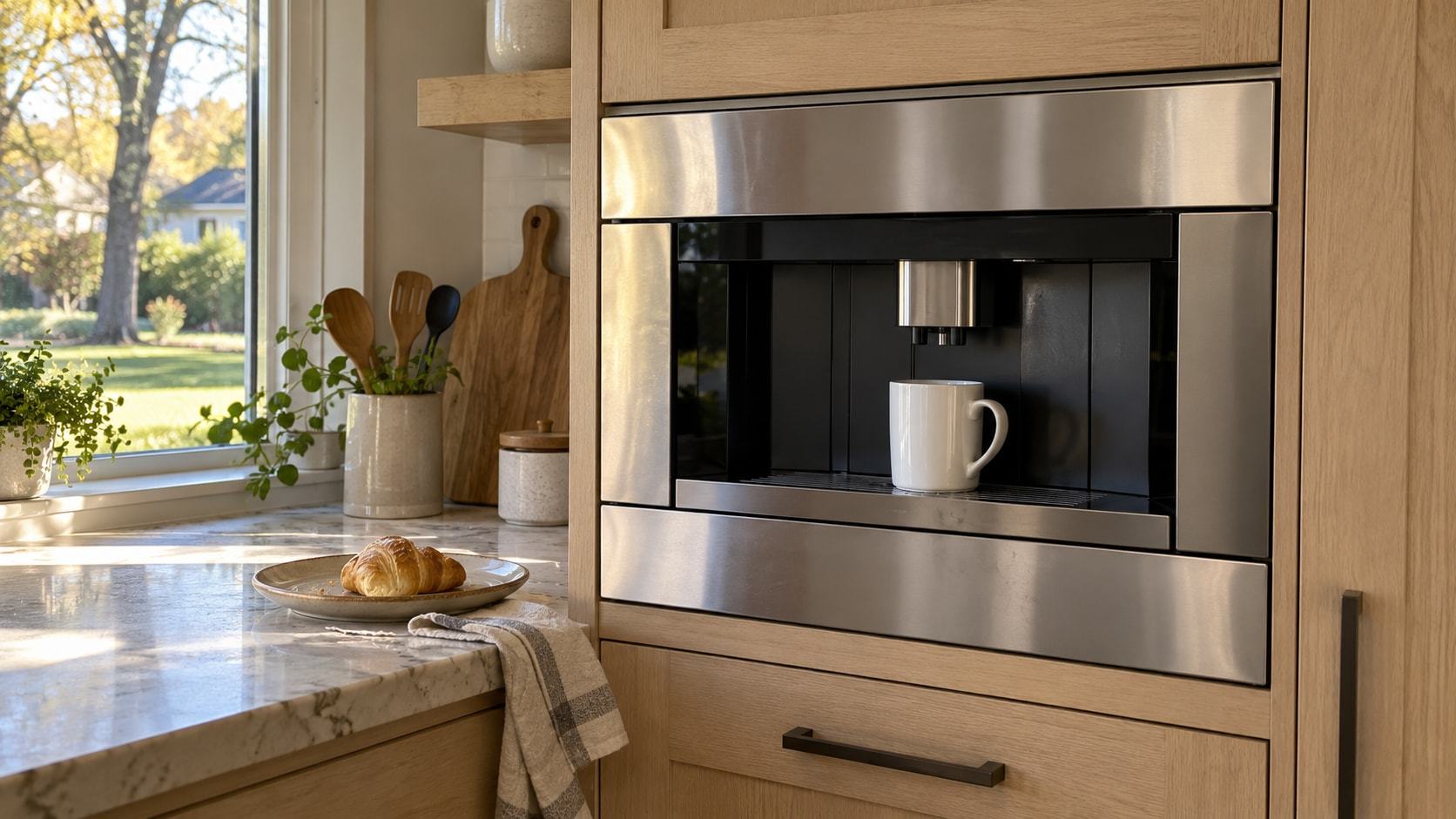
What the cup and the machine are telling you
Coffee systems combine grinding, water handling, heating and electronics in a small space, so symptoms overlap. This is how we narrow them down on Wolf units.
-
Grinds, then nothing pours or the cycle aborts
Usually behind it: Pump, inlet or outlet valve, heavy scale in the water path, or a brew unit that is jammed or not locked in.
The way forward: Check the tank is seated and full, then remove and reseat the brew unit.
-
Coffee pours in drips, much slower than it used to
Usually behind it: Scale restricting the heater or valves, a grind set too fine, or a pump losing pressure.
The way forward: Run a full descaling cycle if it is due. If it is still slow, the pump or valves need testing.
-
Bitter, sour, weak or inconsistent coffee
Usually behind it: Stale or very oily beans, grind setting, scale affecting brew temperature, or worn grinder burrs.
The way forward: Try fresh beans and a coarser grind before assuming a fault.
-
Grinder rattles, whines or runs without grinding
Usually behind it: A foreign object in the bean hopper, a jammed burr set, worn burrs or a failing grinder motor.
The way forward: Switch off and look into the empty hopper. Do not run it while it is jammed.
-
Water under the unit or in the cabinet
Usually behind it: Brew unit seals, a cracked or poorly seated tank, internal hoses or a pump fitting.
The way forward: Switch off, empty the tank and dry the area. Note where the water appears.
-
Descaling reminder stays on after descaling
Usually behind it: An interrupted cycle, a cycle that did not run start to finish, or a counter or sensor problem.
The way forward: Repeat a complete cycle following your use-and-care guide before calling.
-
Milk is barely warm or the froth is weak
Usually behind it: Scale or milk residue in the frothing system, a blocked nozzle, or a weak steam or heating circuit.
The way forward: Clean the milk system thoroughly. Persistent weak steam needs a technician.
-
Error message on the display
Usually behind it: Depends on the message: it can be a sensor, a motor, a heater circuit or the control.
The way forward: Write the exact message down. It saves time on the visit.
Bitter coffee is not always a broken machine
-
Heard often If the coffee turned bitter, something inside has failed.
In practice Most bitterness is over-extraction: a grind that is too fine, too much coffee for the cup size, or beans that are old or very dark and oily. Scale can also push the temperature off. Rule those out before booking a repair.
-
Heard often Descaling is optional when the coffee still tastes fine.
In practice Scale builds up silently in the heater and valves long before you taste it. By the time the cup changes, flow and temperature are already affected.
-
Heard often A leak means the machine is finished.
In practice Most leaks come from seals, a tank seating or a hose connection. These are repairable parts, not the end of the appliance.
-
Heard often Oily, dark-roast beans are best for a built-in machine.
In practice Very oily beans can coat the grinder and hopper and lead to clogs. Many owners have fewer grinder problems with a medium roast and dry-looking beans.
Why does my built-in coffee machine taste bitter?
Usually because the coffee is over-extracted: the grind is too fine, the beans are stale or very oily, or scale is affecting brewing temperature. Try fresh beans, a coarser setting and a full descaling cycle. If the taste stays off, worn burrs or a heating fault may be the cause.
Checks to do before you call
These steps take minutes and solve a surprising share of complaints. They also give the technician useful information if the problem remains.
- Make sure the water tank is filled and pushed fully into place.
- Empty the grounds container and the drip tray, then slide them back until they seat.
- Remove the brew unit, rinse it under running water, let it dry and lock it back in, following your use-and-care guide.
- Look into the bean hopper for a stone, a clip or clumped oily beans.
- Run a complete descaling cycle if the machine has asked for one, without interrupting it.
- Clean the milk system and frothing nozzle if the problem is with milk drinks.
- Write down any error message and the model and serial number from the label.
The brew unit: where most leaks and jams start
The brew unit is the heart of the coffee system. It receives ground coffee, compresses it, pushes hot water through it under pressure and then drops the spent puck into the grounds container. It moves every time you make a cup, and it is designed to come out for regular rinsing.
Its seals and gaskets keep water inside the brewing chamber. When they harden or wear, water finds a way out, which is why a drip under the machine after brewing often traces back here. Coffee residue on the unit can also make it stick partway through its movement, leading to a cycle that stops or an error message.
During a repair the technician checks how the unit moves, the condition of its seals and how it locks into the machine. Some problems are solved by cleaning and adjustment; others require replacing seals or the unit itself. The exact choice and price are explained before any work starts, with the $89 visit credited.
Why rinsing it yourself matters
Coffee oils and fines dry on the moving parts and seals. Rinsing the unit as your use-and-care guide describes keeps it moving freely. Our coffee system care guide covers the routine cleaning in detail.
Why is my Wolf coffee system leaking water?
The usual sources are worn brew unit seals, a water tank that is cracked or not seated properly, a loose internal hose, or a pump fitting. Switch the unit off, empty the tank, dry the area and note where the water appears. Reseat the tank and brew unit; if it still leaks, book a repair.
Wolf coffee systems we repair
Wolf built-in coffee systems come in 24-inch and 30-inch widths. On the 30-inch EC3050 the water comes from a removable tank that holds 84.5 fl oz. For the 24-inch model, the use-and-care guide lists how the water is supplied and how much it holds. Water handling is worth knowing before a visit, because scale, seals and the way the tank seats come up in several of the faults described on this page; on steam ovens the same questions about water apply.
| Point | 24-inch coffee system | 30-inch coffee system |
|---|---|---|
| Water supply | See the use-and-care guide for your model | Removable tank, 84.5 fl oz on EC3050 |
| Assemblies we test | Grinder, pump, valves, heater, brew unit, milk system, controls | Grinder, pump, valves, heater, brew unit, milk system, controls |
| Typical repair location | In your kitchen, sometimes with the unit slid partly out | In your kitchen, sometimes with the unit slid partly out |
Coffee system questions
Can you fix a jammed grinder on a Wolf coffee system?
Yes. We remove what is blocking it, check the burrs and grinder motor, and replace worn parts if needed. Do not keep running the grinder while it is jammed.
How often should a Wolf coffee system be descaled?
Follow the reminder on the machine and the interval in your use-and-care guide, which depends on how much you use it and your water. Complete every cycle without interrupting it.
How do I book a coffee system repair in Naperville?
Call (872) 276-8585, answered 24/7, or book a visit online. Home visits run daily from 8 AM to 6 PM, the $89 service call is credited toward the repair, and the pricing page explains how the final price is set. Other questions can go through the contact page.
Tell us what the cup or the machine is doing. Call (872) 276-8585 or book a visit online; the $89 visit is credited toward the repair, and the exact price is set after the technician inspects the coffee system.
Calls answered 24/7 · visits daily, 8:00 AM – 6:00 PM